

What Gets Recorded
Why I Write About Systems, Surviival and the Words We Choose

SUBJECT: Structural Integrity
STATUS: Narrative Reconstruction
RECORD: Issue 01 / March 2026
I. The Moment Language Shifted
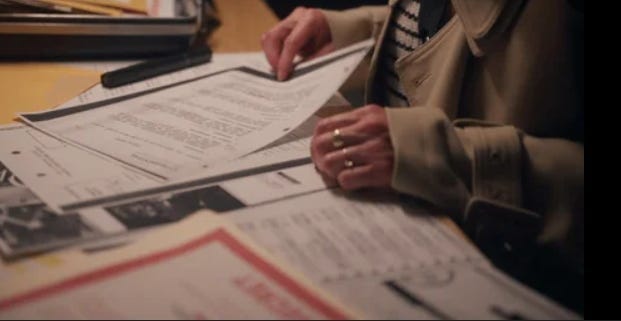
I remember the first time I understood that silence can protect an institution.
It wasn’t dramatic.
There was no scandal breaking across the news.
No raised voices. No whistleblower moment.
Just a conference room with stale coffee and a slide deck projected slightly off-center on the wall.
The policy update was described as a “necessary consolidation of oversight structures.” That was the phrase.
Necessary. Consolidation. Oversight.
The change meant fewer review checkpoints.
Fewer internal appeals. A streamlined reporting process.
No one in the room asked what oversight had previously caught.
No one asked who would lose recourse if the reporting process shortened.
The discussion focused on efficiency.
Budget sustainability. Reducing redundancy.
“Improving service delivery outcomes.”
The language was smooth. Reasonable. Carefully neutral.
And yet I felt something tighten in my chest.
It took me years to understand why.
Nothing in that room was technically untrue. The data was accurate. The charts showed savings. The proposal aligned with broader strategic priorities.
But what I slowly began to recognize — first in that room, and then in other boardrooms, memos, and press releases was how a collective agreement not to name impact becomes its own kind of truth.
If everyone refers to layoffs as a “workforce optimization,” eventually it stops sounding like someone lost their livelihood.
If housing displacement is called “urban revitalization,” the human cost feels secondary to progress.
If student debt increases are framed as “tuition adjustments aligned with market value,” it becomes impolite to ask who that market excludes.
A lie spoken by one person is fragile.
A lie spoken by many becomes infrastructure.
That realization didn’t make me angry.
It made me attentive.
II. The First Time I Heard a Word Weaponized
The second moment came later.
I was reading two summaries of the same incident.
In one, it was described as “use of force.”
In the other, it was described as “a necessary intervention to restore order.”
Same footage. Same outcome.
Different vocabulary.
And the difference changed the emotional temperature entirely.
Language doesn’t just describe reality. It arranges it.
It decides where responsibility sits.
It decides who sounds credible.
It decides who sounds unreasonable.

I began to notice how often power hides in phrasing.
A “protocol breach” feels procedural.
A “mistake” feels forgivable.
A “misconduct allegation” feels abstract.
A “person was harmed” feels immediate.
A company doesn’t “underpay workers.” It engages in “wage recalibration.”
A government doesn’t “cut funding.” It “reallocates resources.”
A tech firm doesn’t “track you.” It “enhances user experience through data integration.”
Institutions prefer the version that sounds orderly.
Not always because they are scheming.
But because disorder is destabilizing.
Distance prevents panic.
Distance prevents protest.
Distance protects continuity.
The more I listened, the more I heard it — that steady hum of insulation.
Events reshaped so they could be absorbed without rupture.
And once I heard it, I couldn’t unhear it.
III. Why I Begin Stories with Paperwork
When I draft fiction, I rarely start with violence.
I start with documentation.
A memo announcing “temporary service interruptions.”
A public statement expressing “deep regret” without naming responsibility.
A compliance form that reduces someone’s experience to a checkbox.
I do not do this to be clever.
I do it because that is where I have learned to look.
The most destabilizing changes rarely begin with chaos.
They begin with formatting.
With the quiet authority of bullet points.
With the calm tone of a spokesperson assuring the public that “all procedures were followed.”
In my stories, interrogating power does not require staging dramatic uprisings.
It means examining the scaffolding.
Who benefits from the phrasing?
Who disappears in the summary?
What questions are considered disruptive?
Survival, in that landscape, is less about heroics and more about awareness.
Not reading between the lines.
Reading the lines themselves and noticing what they avoid.
Learning to identify when something is being softened.
Learning to hear what’s missing.
That kind of survival isn’t cinematic.
But it is recognizable.
IV. The Cost You Only See from the Inside
Corruption rarely looks like a villain twirling a mustache.
More often, it looks like a committee vote.
It looks like “this is above my pay grade.”
It looks like “we followed the proper channels.”
It looks like a hospital denying coverage because a procedure wasn’t “pre-authorized.”
It looks like an employee told their termination was “performance-based restructuring.”
It looks like a complaint dismissed because it didn’t meet “threshold criteria.”
From the outside, institutions look orderly.
From the inside or from the position of someone impacted, the cost becomes visible.
You see how decisions ripple outward.
You see how responsibility disperses until no one feels personally accountable.
You see how harm can occur even when every box was checked.
That is the part that unsettles me most.
Not that systems are powerful.
But they can operate exactly as designed and still produce damage. While the language surrounding them remains calm.
It is one thing to confront something openly unjust.
It is harder to interrogate something that sounds reasonable.
It is harder to articulate discomfort when the official version is coherent.
That is why a lie spoken by many is so effective.
Not because it fools everyone.
But because it becomes normal.
And normal is difficult to challenge.
V. Naming the Pattern
There are patterns I’ve learned to recognize.
Procedural silence — when documentation smooths over impact through neutral phrasing.
Administrative distance — when language separates decision-makers from consequences.
Narrative containment — when official statements become the version that circulates most widely.
None of these requires conspiracy.
They require coordination.
And coordination feels responsible.
If everyone uses the same terminology, the institution appears unified.
If the story is consistent, it feels stable.
Stability becomes evidence of legitimacy.
Legitimacy becomes protection.
Protection becomes power.
It’s a quiet cycle.
And because it is quiet, it often goes unquestioned.
VI. Why This Matters Now
I do not write about systems because I believe they are inherently corrupt.
I write about them because they shape our lives.
They determine who gets approved.
Who gets denied.
Who gets heard.
Who gets summarized.
We live in a time where repetition hardens quickly.
Where headlines outrun nuance.
Where carefully chosen phrases can circulate across millions of screens before anyone pauses to ask what they obscure.
Around us are the powerful — not always monstrous, not always intentionally harmful, but protected by the language that frames their actions as necessary.
You often do not recognize the distortion until it touches you.
Until your experience is condensed into a policy category.
Until your objection is labeled “noncompliant.”
Until your loss is described as “collateral impact.”
Only then do you feel the space between what happened and how it was described.
That space — that gap between record and reality is where my stories live.
Not in outrage.
In attention.
If official language can make harm feel procedural, then fiction can restore scale.
Not to dismantle everything.
But to slow the reader down.
To ask: what does this actually mean?
To remind us that language is not neutral.
It carries weight.
Systems rarely collapse because of what they document.
They endure because of what they make ordinary.
And what becomes ordinary is rarely examined.
That meeting room from years ago wasn’t historic.
No headlines followed it.
No public apology.
Just a decision recorded cleanly.
But I remember the tone.
The relief in the room when everyone agreed.
The way the phrasing made the outcome feel inevitable.
That was the moment I began writing about systems and survival.
Not to expose secrets.
But to understand how language cushions impact and how awareness can soften that cushion just enough to see what lies underneath.
Naming a pattern does not dismantle it.
But it makes it visible.
And visibility is a quiet form of steadiness.
That feels like a beginning.
Maintained & Recorded by
— Haven Lopaz
The full archive may be accessed here. It remains open to those who enter.
If this work has been meaningful & you’d like to support it independently, you may do so here.
For ongoing discussion, a quiet channel is maintained in Chat.
If you wish to respond, the record remains open below.